
Heritage and Retrofit: What Eaton Square’s LBCO Could Mean for Listed Buildings
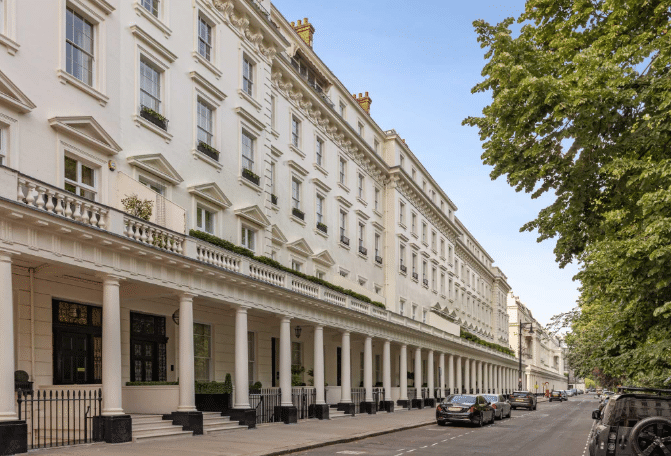
A new approach to heritage retrofit at Eaton Square could provide an important model for reconciling the conservation of historic buildings with the need to improve energy efficiency and climate resilience.
Climate adaptation is becoming an increasingly important consideration in the management of historic buildings. The challenge for owners, designers and conservation professionals is how to improve environmental performance without unnecessarily sacrificing the historic fabric and architectural character that make these buildings significant.
An emerging initiative at Eaton Square in Westminster provides an interesting example of how this balance might be achieved.
A new approach to consent
Westminster City Council and Grosvenor are pursuing a Listed Building Consent Order (LBCO) for Eaton Square. Rather than requiring owners to make separate Listed Building Consent applications for every qualifying alteration, the proposed LBCO would establish advance consent for defined heritage-sensitive retrofit measures, subject to specified conditions and safeguards.
The measures include window improvements, awnings and solar panels, with the wider programme intended to improve thermal comfort, reduce energy consumption and increase the resilience of historic properties to a changing climate.
According to the emerging proposals, measures facilitated by the LBCO are anticipated to reduce annual energy consumption across Eaton Square by up to 13% and carbon emissions by up to 19%, alongside improvements to thermal comfort and climate resilience.
Conservation and environmental adaptation
The initiative reflects an important principle: heritage conservation and environmental adaptation do not necessarily have to be competing objectives. The long-term conservation of historic buildings depends not only upon retaining significant fabric, but also upon their remaining comfortable, functional, maintainable and viable.
This does not mean that energy efficiency automatically justifies the removal of historic windows, doors or other significant fabric. Repair and sensitive upgrading should remain important starting points where historic fabric contributes meaningfully to the significance of a listed building.
Conservation decisions can, however, require consideration of a wider range of factors, including significance, authenticity, condition, repairability, energy performance, occupant comfort and climate resilience.
What could this mean for historic windows and doors?
Windows and doors illustrate the issue particularly clearly.
Traditional joinery can make an important contribution to the architectural and historic interest of a listed building. In many cases, repair, draught-proofing, secondary glazing or other sensitive upgrading will provide the appropriate response.
In others, the position may be more complex. Joinery may have undergone successive repair and alteration, its precise age may be uncertain, deterioration may be extensive, and achieving meaningful improvements to weather-tightness, security or thermal performance may require substantial intervention.
In these circumstances, the conservation question should not simply be “can this window or door technically be repaired?”
It should also consider what makes the opening significant, how much significant historic fabric survives, what would be involved in repairing and upgrading it, and whether an alternative intervention could preserve its architectural character while providing a durable long-term solution.
A potential model for heritage retrofit
The proposed Eaton Square approach would not remove the need for careful heritage assessment, nor should it be interpreted as providing unrestricted permission to replace historic windows or other architectural features.
Its wider significance lies in recognising that carefully controlled adaptation can itself contribute to the long-term conservation of historic buildings.
For owners of listed buildings, the starting point remains an understanding of significance: identifying which fabric should be retained and repaired, where sensitive upgrading is possible, and where more substantial intervention might be justified without materially diminishing special architectural or historic interest.
If successfully implemented, the Eaton Square LBCO could provide a useful model for moving heritage retrofit away from a perceived conflict between conservation and environmental performance towards a more integrated approach in which both contribute to keeping historic buildings viable and in sustainable use.
Squire Heritage Consulting advises owners, architects and project teams on the repair, adaptation and sensitive upgrading of listed and historic buildings, including the assessment of historic windows and doors.